Discipline-based
- Depends on motivation
- Big swing, then collapse
- Outcome-focused goal
- Willpower as lever
- Willpower depletes daily
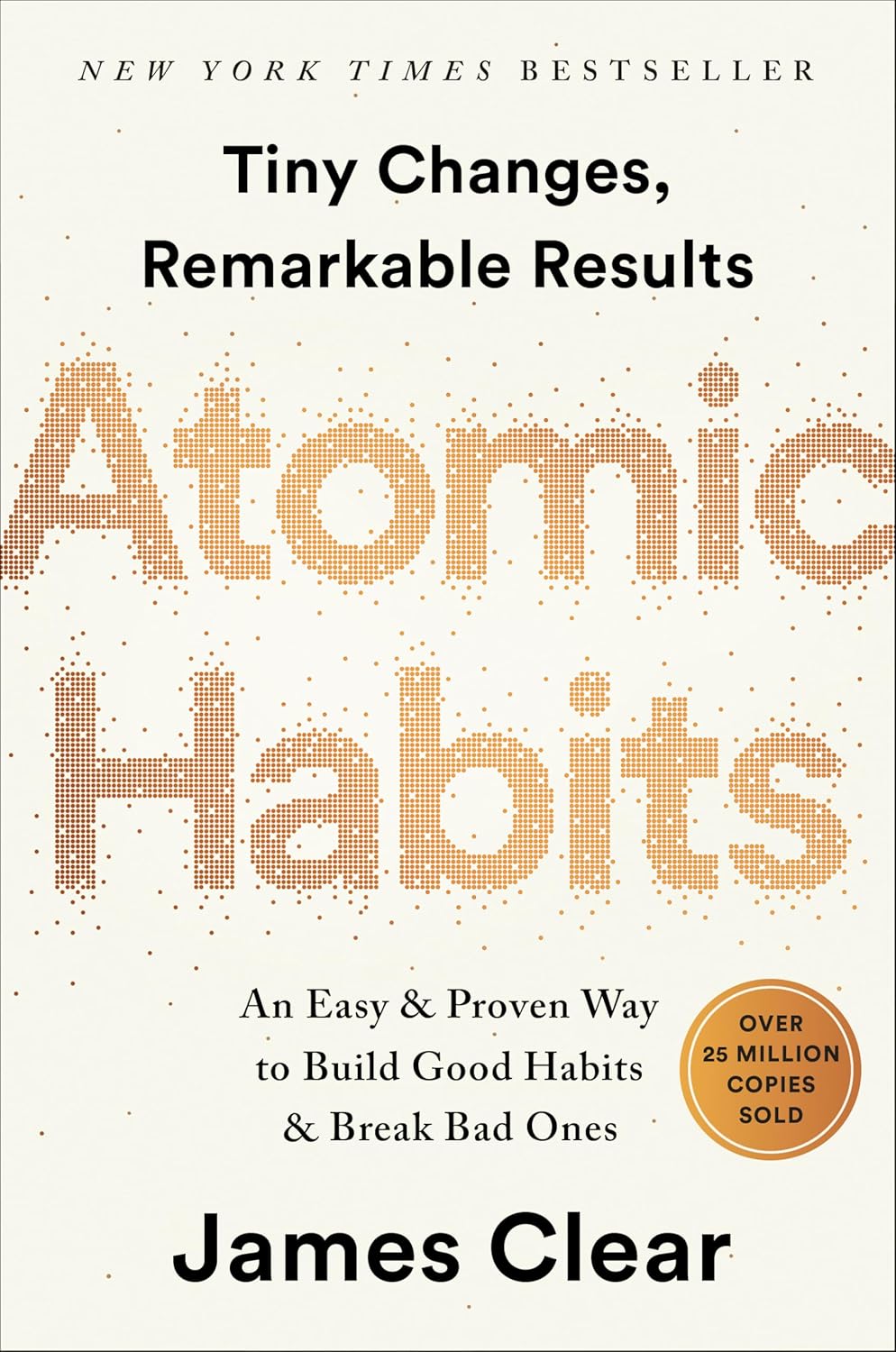
by James Clear
Source book · ~5h read
“You do not rise to the level of your goals. You fall to the level of your systems.”
The argument
James Clear argues that lasting change isn't about willpower or motivation — it's about systems and identity. A habit is a vote for the kind of person you're becoming. The smallest possible behaviors, repeated and stacked, compound into outcomes that look superhuman from the outside. Tiny habits aren't slow; they're invisible until they're inevitable.
At a glance
The hook
Discipline that depends on motivation collapses the day motivation does — which is most days, late in the year.
Founders are over-supplied with advice about what to do and under-supplied with help on how to actually keep doing it through a hard quarter. Clear's gift is shifting the question from 'why am I not motivated?' to 'why doesn't my environment make this automatic?'
For first-time founders the asymmetry is brutal: no boss is enforcing accountability, no team is structurally relying on you yet, and your own willpower is the only thing in the way of slipping. A system that runs on environmental cues, not on willpower, is the difference between a founder still going at month 18 and one who's quietly stopped.
0 takeaways
Pick the one founder habit that, if you did it consistently for 90 days, would most change your trajectory. Not 'work harder' — specific. 'Talk to one customer per day.' 'Write 30 minutes of strategy reflection every morning.'
Now stack it onto an existing daily anchor. 'After [anchor], I will [habit].'
After my morning coffee, I will write the day's customer-conversation question.
After my 1pm calendar block, I will send one customer-research outreach.
Make it so easy you can't fail on a bad day. The bar is one customer message, not 'a great conversation.' The first month you're building the cue–response loop; the outcome compounds in months 2–6.
Track the input on a visible chart. Not because chart-keeping is magical — because identity-based habits need evidence: 'I'm the kind of founder who talks to customers daily, here's the chain.'
Read
Search Atomic Habits by James Clear on Amazon, your local bookshop, or your library system.
The loop closes here
When a founder applies an idea from Atomic Habits and something shifts, they post it as a Knack. Knacks tagged with this book surface here — practical, written by the people who lived it.
Open invitation
Did applying something from this book change a week, a decision, a meeting? Tell another founder. Even a small shift, written honestly, is the kind of Knack that gets marked “This worked” — and helps the next founder pick up the book and try it.
Pseudonymous by default. No humble-bragging — just here's what I tried, here's what shifted.
Share