Most companies
- Operate in 2 of 3 hedgehog circles
- Charismatic / aggressive leaders
- Fast hiring, slow firing
- Drift without long-term goals
- Ignore brutal facts
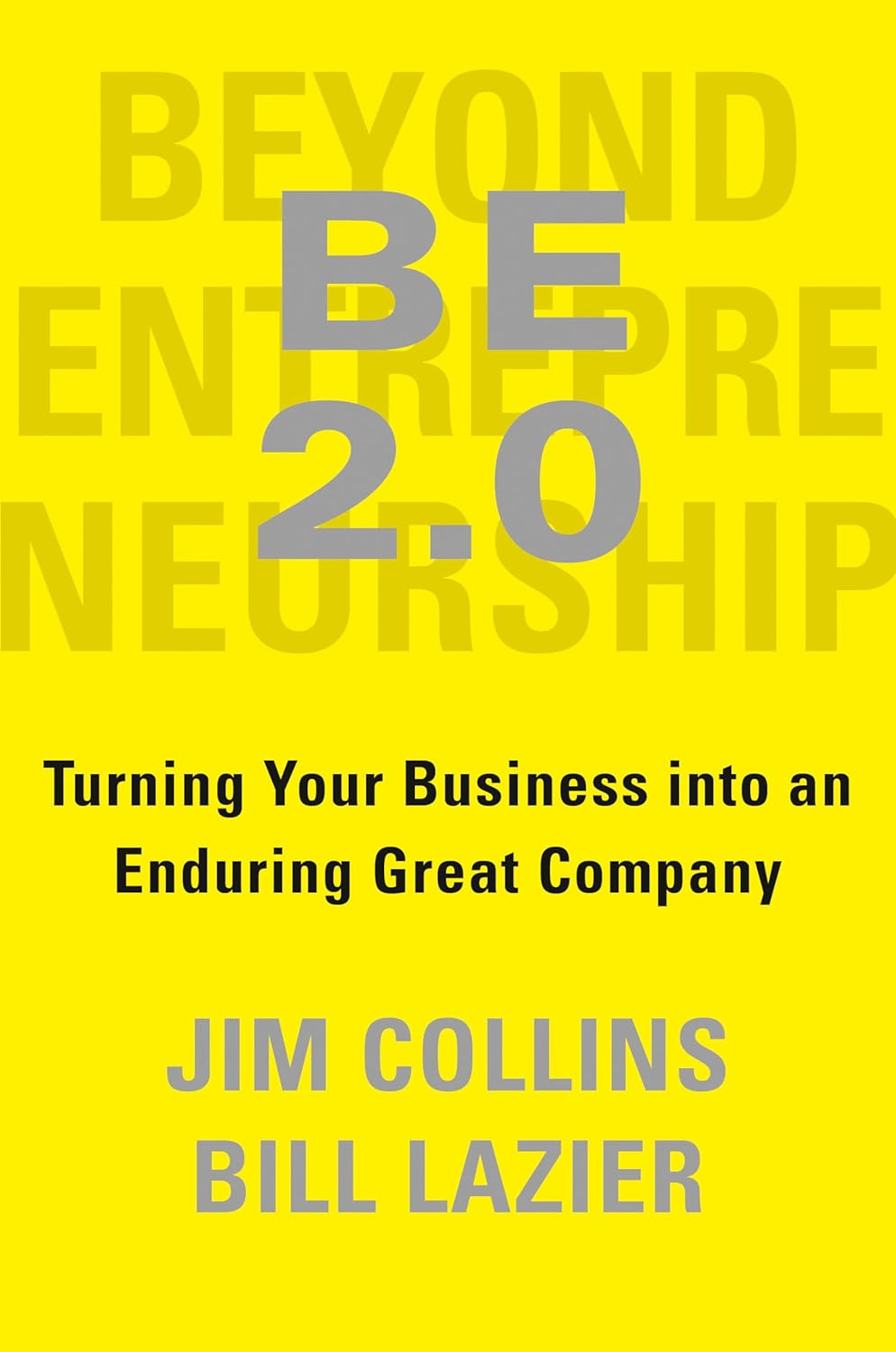
by Jim Collins & Bill Lazier
Source book · ~8h read
“Greatness is not a function of circumstance. Greatness, it turns out, is largely a matter of conscious choice and discipline.”
The argument
Jim Collins and Bill Lazier (Lazier was Collins' mentor at Stanford) distill what they learned about building enduring great companies from the founder stage onward. The book combines core ideology (Collins' continuing thesis from Built to Last and Good to Great), first who, then what, Big Hairy Audacious Goals, the Hedgehog Concept, and Level 5 Leadership. The 2.0 update brings four decades of research into one founder-applicable text.
At a glance
The hook
You want the founder bible written by someone who actually built one.
Most first-time founders are starved for integrated, evidence-based founder advice — not single-topic books, not vibes-based 'wisdom,' but a systematic, research-grounded synthesis of what actually works. Beyond Entrepreneurship 2.0 is that synthesis.
Collins distills decades of research — Built to Last, Good to Great, Great by Choice, How the Mighty Fall — into a founder-stage application. The frameworks alone justify the read: Hedgehog Concept (the intersection of what you can be best at, what drives your economic engine, and what you're deeply passionate about), First Who Then What (get the right people on the bus before you decide direction), Level 5 Leadership (the paradoxical mix of personal humility and professional will), the BHAG (Big Hairy Audacious Goal as multi-decade direction-setter), the Stockdale Paradox (confront brutal facts AND maintain unwavering faith).
For first-time founders, this book is the closest thing to required reading in the founder canon. It's not novel — Collins synthesizes what he's already published — but the synthesis itself is the value. Most founders never see his frameworks side-by-side; this book is where they integrate.
0 takeaways
Take 60 quiet minutes. Draw three overlapping circles. Label them:
What can we be the best in the world at?
What drives our economic engine?
What are we deeply passionate about?
For each, list 3–5 specific items. Be honest; aspirations don't qualify.
'Best in the world at' ≠ 'want to be best at.' It's what you can actually deliver better than anyone else, given who you are and what you've built.
'Economic engine' ≠ 'how we'd love to make money.' It's the actual unit economics that, when scaled, produce sustainable returns.
'Deeply passionate about' ≠ 'somewhat interested in.' Passion is what survives the bad week.
Find the intersection — the hedgehog. Most companies operate in 2 circles, not 3. If you're missing the third circle, you've found the source of long-term mediocrity.
Now ask: what would we have to change to operate in all 3? Sometimes the answer is the company changes; sometimes the answer is the founder needs to acknowledge they're in the wrong company. Both answers are valuable.
Read
Search Beyond Entrepreneurship 2.0 by Jim Collins & Bill Lazier on Amazon, your local bookshop, or your library system.
The loop closes here
When a founder applies an idea from Beyond Entrepreneurship 2.0 and something shifts, they post it as a Knack. Knacks tagged with this book surface here — practical, written by the people who lived it.
Open invitation
Did applying something from this book change a week, a decision, a meeting? Tell another founder. Even a small shift, written honestly, is the kind of Knack that gets marked “This worked” — and helps the next founder pick up the book and try it.
Pseudonymous by default. No humble-bragging — just here's what I tried, here's what shifted.
Share