Armored
- Avoid hard conversations
- Lead with certainty
- Vulnerability = weakness
- Failure = identity threat
- Values = slogans on the wall
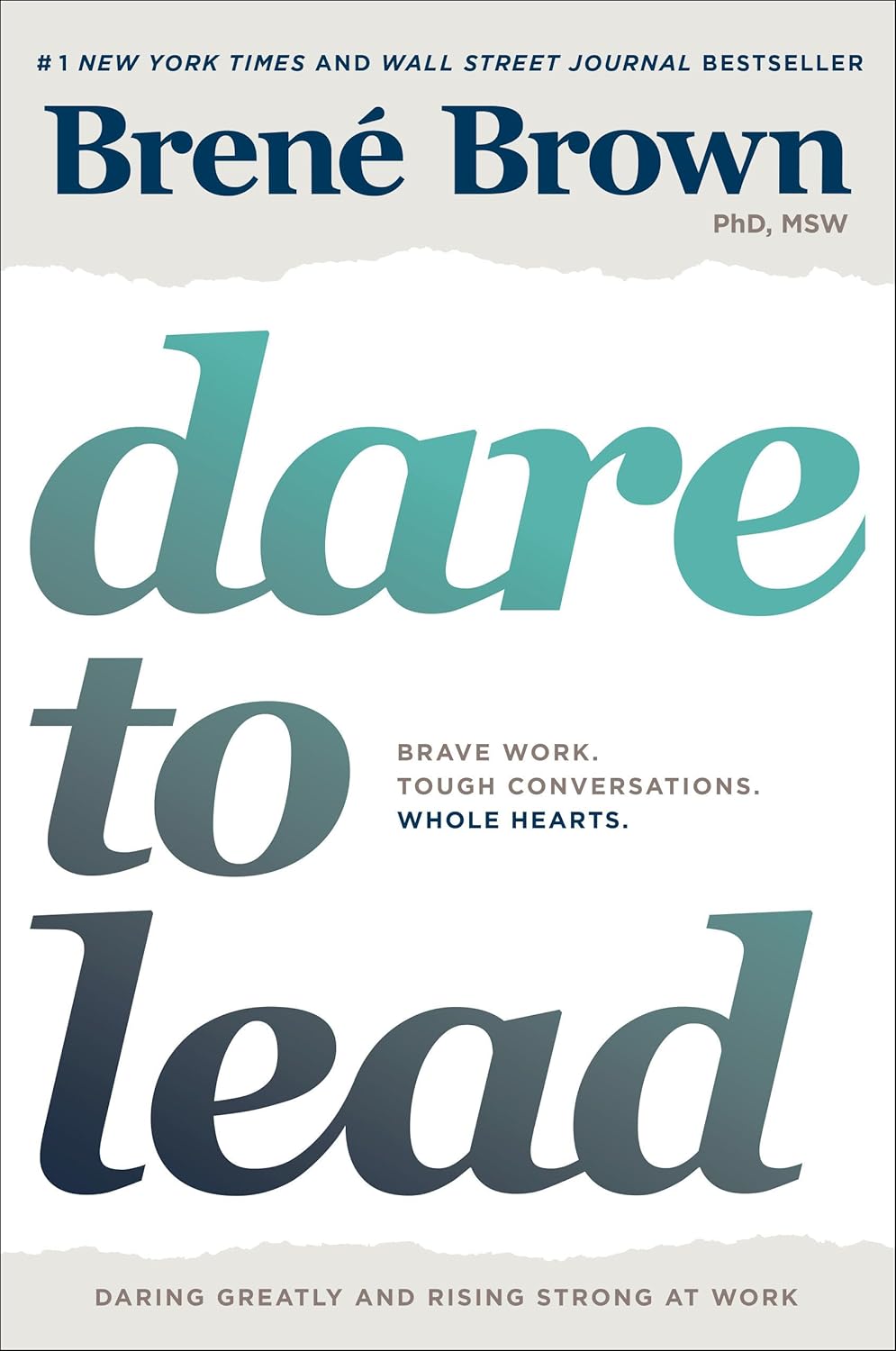
by Brené Brown
Source book · ~6h read
“Vulnerability is the birthplace of love, belonging, joy, courage, empathy, and creativity.”
The argument
Brené Brown argues that the leadership challenge isn't strategy or technical skill — it's the courage to lead with vulnerability, to have hard conversations, and to operate from values when it's uncomfortable. Drawing on years of qualitative research, she identifies four 'skill sets' of brave leadership: rumbling with vulnerability, living into our values, braving trust, and learning to rise. Most leadership development trains technique; Brown trains the underlying courage that makes technique work.
At a glance
The hook
The leadership being asked of you is harder than the work you actually love.
First-time founders quickly discover that the technical work is the easy part. The hard part is the human work — naming what's wrong with a co-founder relationship, telling an early hire they're not growing, sitting with the discomfort of telling the team you're scared. Brown's contribution is naming this work as the actual leadership task and giving you the language and frame for it.
The key reframe: 'rumbling with vulnerability' isn't softness — it's the practice of leaning into hard conversations rather than around them. 'Living into our values' means making the harder choice when values and ease conflict. 'Braving trust' is the granular, observable behaviors that build trust over time. 'Learning to rise' is the recovery skill — what you do after you fall, which determines whether you keep leading.
For first-time founders specifically, this book closes the gap between being a strong individual contributor and being someone people will follow into uncertainty.
0 takeaways
Identify the single hard conversation you've been avoiding for more than two weeks. Be honest — most founders have at least one open at any given time.
Now walk it through Brown's frame:
Rumble with vulnerability — what am I afraid of in having this conversation? Name it specifically. 'I'm afraid they'll quit.' 'I'm afraid I'll cry.' 'I'm afraid they'll think I'm not strong.' The fear is real; naming it is the first step to acting despite it.
Living into values — which of my values does avoiding this violate? Honesty? Respect? Care? Avoiding the conversation is choosing comfort over a value you claimed to hold.
The story I'm telling myself — what story am I telling about why this conversation will go badly? Is it true, or is it a story? Often the story is wrong, and the actual conversation goes better than imagined.
Schedule the conversation this week, with a specific time. Open with: 'There's something I've been thinking about that I want to share with you.' Lead with vulnerability. Get curious. Listen.
The conversation doesn't always go well. It almost always goes better than avoiding it does. Repeat enough times, and 'hard conversations' becomes 'conversations.'
Read
Search Dare to Lead by Brené Brown on Amazon, your local bookshop, or your library system.
The loop closes here
When a founder applies an idea from Dare to Lead and something shifts, they post it as a Knack. Knacks tagged with this book surface here — practical, written by the people who lived it.
Open invitation
Did applying something from this book change a week, a decision, a meeting? Tell another founder. Even a small shift, written honestly, is the kind of Knack that gets marked “This worked” — and helps the next founder pick up the book and try it.
Pseudonymous by default. No humble-bragging — just here's what I tried, here's what shifted.
Share