Fixed mindset
- Effort = evidence of low ability
- Avoid challenges; protect self-image
- See feedback as judgment
- Setbacks reveal who you are
- Threatened by others' success
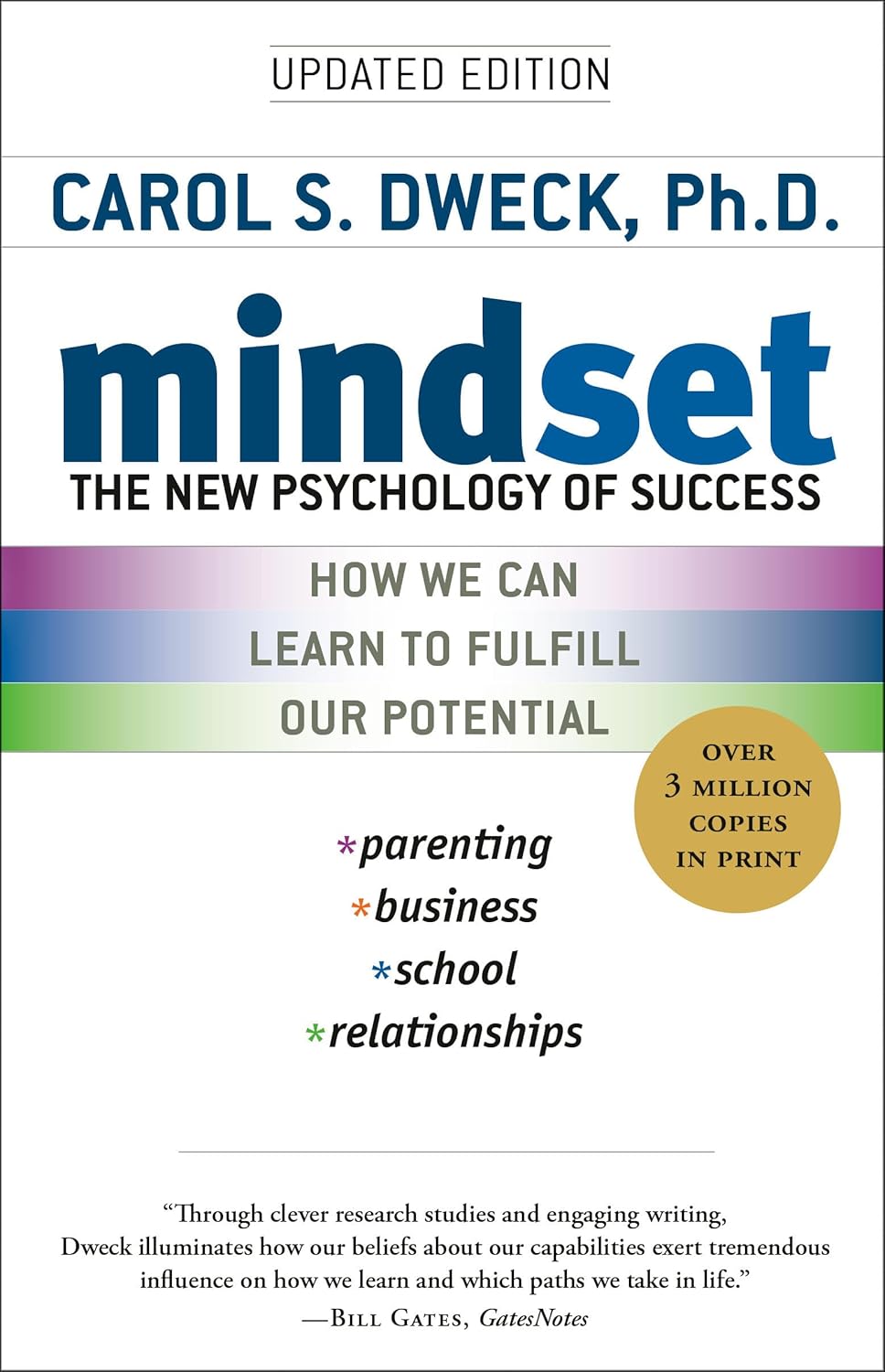
by Carol Dweck
Source book · ~5h read
“The view you adopt for yourself profoundly affects the way you lead your life.”
The argument
Carol Dweck argues that two distinct mindsets shape how people approach challenges. The fixed mindset treats intelligence and abilities as static traits to be proved; the growth mindset treats them as capacities developed through effort, strategy, and learning. The book's claim — backed by decades of research — is that this single distinction predicts who keeps growing and who stalls.
At a glance
The hook
Every week brings a problem you have no precedent for solving.
That's why Persistence isn't really about stamina. It's about interpretation. A founder with a fixed mindset reads each obstacle as evidence of personal limitation; a founder with a growth mindset reads the same obstacle as the next capability to build. The compounding gap between the two interpretations, repeated thousands of times across a venture, is most of what determines outcomes.
For first-time founders the trap is especially severe — you have no track record to refute your worst self-doubts, so a single setback can feel like a verdict on your founder-ness. Dweck's contribution is the precise, observable language for catching the fixed mindset in the act and choosing differently.
0 takeaways
For one week, every time you face a setback — a customer says no, a feature breaks in production, a co-founder pushes back on your call — write down the first sentence that runs through your head. End of week, read the list back.
Sentences like "I'm not cut out for this," "I can't do X," or "This always happens to me" are fixed-mindset signals. Rewrite each in growth-mindset form: "I haven't figured out X yet," or "What does this reveal about what I need to learn?"
Notice which areas of your founder life trigger the fixed-mindset response most often. Those are where to focus next month.
Read
Search Mindset: The New Psychology of Success by Carol Dweck on Amazon, your local bookshop, or your library system.
The loop closes here
When a founder applies an idea from Mindset: The New Psychology of Success and something shifts, they post it as a Knack. Knacks tagged with this book surface here — practical, written by the people who lived it.
Open invitation
Did applying something from this book change a week, a decision, a meeting? Tell another founder. Even a small shift, written honestly, is the kind of Knack that gets marked “This worked” — and helps the next founder pick up the book and try it.
Pseudonymous by default. No humble-bragging — just here's what I tried, here's what shifted.
Share