One-part change
- Explain why → expect compliance
- Cite reasons; address Rider only
- Path stays unchanged
- Bright spots ignored
- Reverts within 30 days
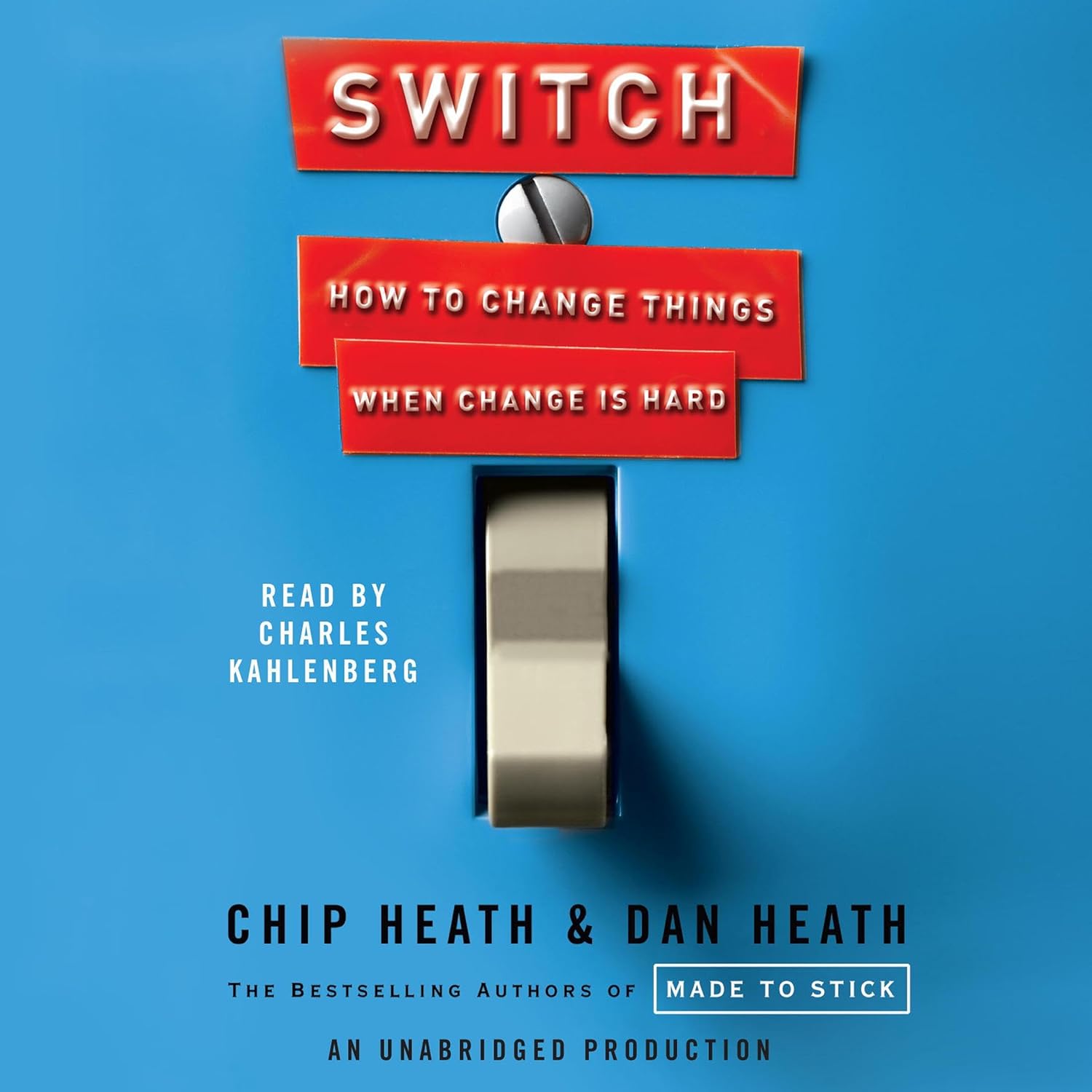
by Chip & Dan Heath
Source book · ~5h read
“What looks like a people problem is often a situation problem.”
The argument
Chip and Dan Heath argue that change requires three things, not one: the rational mind needs direction (the Rider), the emotional mind needs motivation (the Elephant), and the situation needs to be made easier (the Path). Most change efforts fail because they address only one of the three — usually the rational. 'Shape the path' is the most overlooked element: when behavior is hard, change the situation, not the person.
At a glance
The hook
You know what to change but you can't make it stick.
Founders are change agents. Introducing new processes, new habits, new cultural norms — all of it is change, and most of it fails because the founder addresses only the rational mind. They explain why the change is needed, expect compliance, and are surprised when it reverts.
The Heath brothers' contribution is the three-part framework. *The Rider (rational mind) needs direction* — specific, scripted moves, not abstract goals. The Elephant (emotional mind) needs motivation — feeling, identity, belonging. The Path (the situation) needs to be shaped* — make the right behavior easy, the wrong behavior hard*.
For first-time founders, the most actionable element is shaping the path. Most behavioral problems are situational, not motivational. If the team isn't doing X, often the fix isn't more motivation — it's removing a friction that was keeping them from X. This reframe is liberating: it shifts you from trying to change people to trying to change the system around them.
0 takeaways
Pick one change you've been trying to introduce in your team or yourself for 30+ days that hasn't stuck.
Walk it through the three parts:
Direct the Rider — Have I been specific enough? Or am I asking for an abstract goal? Specific = a single, scripted behavior. 'Send a customer-facing summary by Friday EOW' not 'communicate better with customers.'
Motivate the Elephant — Have I tied this to identity or feeling? Or am I just citing reasons? 'We're the kind of team that closes the loop with customers' (identity) beats 'closing the loop is important' (reason).
Shape the Path — Have I removed the friction that was preventing the new behavior? Or am I asking people to push through situational obstacles? Adding the customer-summary template to the team's weekly meeting agenda removes friction; expecting them to remember to do it adds friction.
Find the bright spot — Has anyone already done this even partially? What did they do? Amplify the bright spot, don't try to invent the solution.
Run the change again with all three parts in place. Most stuck changes were missing 1–2 of the three. The reset usually unsticks them.
Read
Search Switch by Chip & Dan Heath on Amazon, your local bookshop, or your library system.
The loop closes here
When a founder applies an idea from Switch and something shifts, they post it as a Knack. Knacks tagged with this book surface here — practical, written by the people who lived it.
Open invitation
Did applying something from this book change a week, a decision, a meeting? Tell another founder. Even a small shift, written honestly, is the kind of Knack that gets marked “This worked” — and helps the next founder pick up the book and try it.
Pseudonymous by default. No humble-bragging — just here's what I tried, here's what shifted.
Share