Everything at once
- 20 priorities, all simultaneous
- 'I'll figure it out as I go'
- Mission statements that no one reads
- Slides that explain everything
- Months before first user
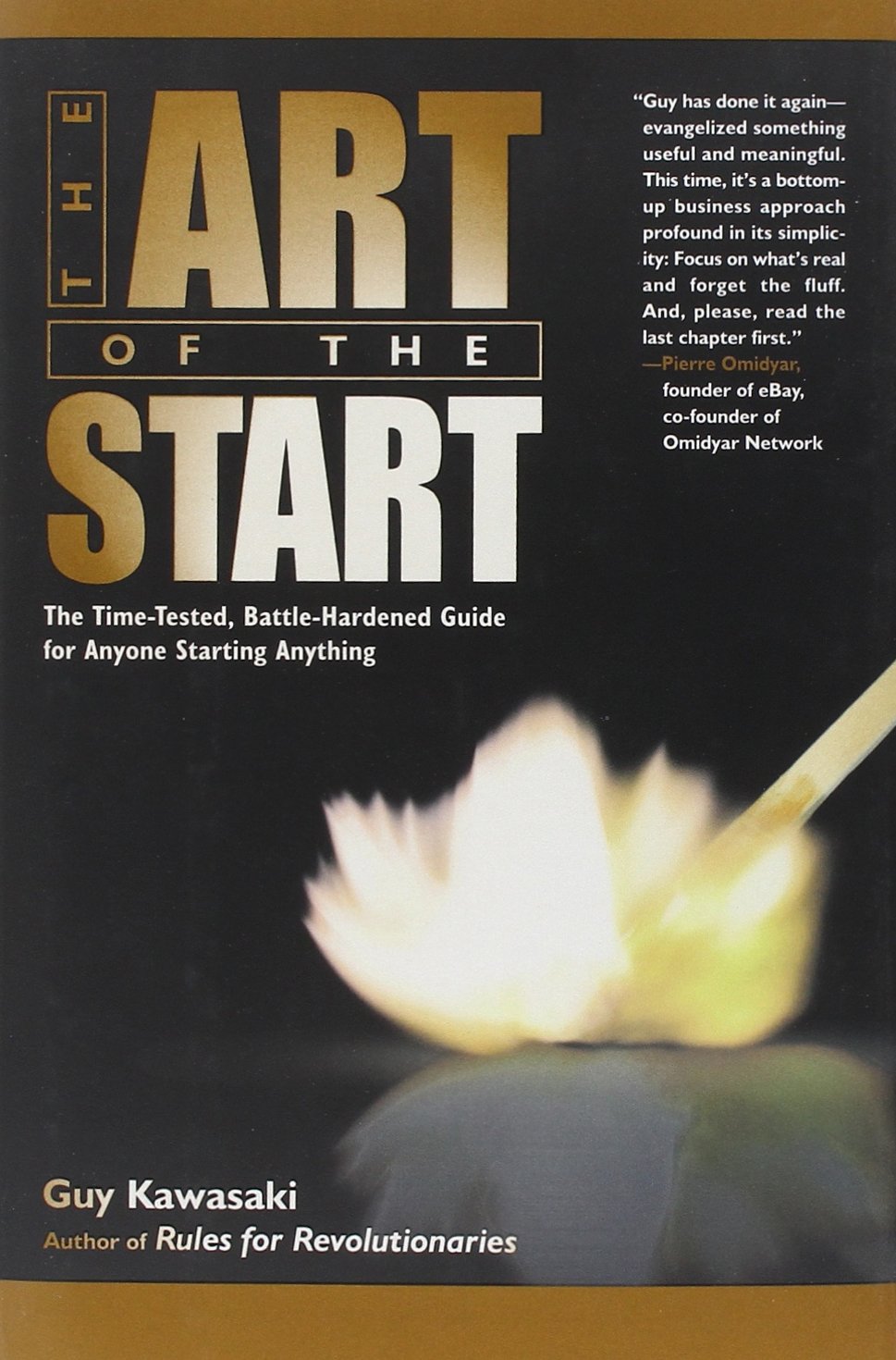
by Guy Kawasaki
Source book · ~5h read
“Don't worry, be crappy.”
The argument
Guy Kawasaki, ex-Apple evangelist and venture investor, distills entrepreneurship into practical, sequenced advice for the actual sequence of starting a company: make meaning, make a mantra, get going, define your business model, weave a MAT (milestones, assumptions, tasks), build a team, raise capital, partner, brand, rainmake, be a mensch. The book is more checklist than theory — Kawasaki's value is reducing the abstract to the concrete.
At a glance
The hook
You don't know which of the founder-tasks comes first. Kawasaki's value is the order.
First-time founders are confronted with 20 simultaneous demands: hire, sell, build, raise, network, brand, plan, partner, ship. Without a sequence, they end up doing all of them at 30% — and none of them reaches threshold. Kawasaki's contribution is the sequence: he tells you which tasks to do first, which to do later, and which to skip entirely.
The book is heavy on tactics: the elevator pitch, the 10–20–30 rule for slide decks, the 'mantra' instead of mission statement, the GIST principle (Get It Started). Most aren't novel; their value is being concretely sequenced. For first-time founders, this is the difference between paralyzed by everything-at-once and executing one task at a time, in sequence. The book ages — some tactics from 2004 are dated — but the sequencing logic survives.
0 takeaways
Block 30 quiet minutes. Try to write a 2–3 word mantra for your company. Not a mission statement. Not a tagline. A mantra: a phrase your team could recite under stress that captures what you're actually trying to do for whom.
FedEx: 'Peace of mind.' Nike: 'Authentic athletic performance.' Disney: 'Fun family entertainment.'
Yours might be: 'Founder honesty.' Or 'Co-founder fit.' Or 'Sequenced practice.'
The test: would your team be able to recite it without prompting? Would each person interpret it the same way?
If yes — that's the mantra. Print it. Use it in every meeting opening for a quarter.
If no — you don't have a mantra yet, you have a slogan. Keep working until each word earns its place.
A real mantra reduces the friction of decision-making: 'does this proposed feature serve the mantra? If not, why are we considering it?' That's its operational value, not just its rhetorical one.
Read
Search The Art of the Start by Guy Kawasaki on Amazon, your local bookshop, or your library system.
The loop closes here
When a founder applies an idea from The Art of the Start and something shifts, they post it as a Knack. Knacks tagged with this book surface here — practical, written by the people who lived it.
Open invitation
Did applying something from this book change a week, a decision, a meeting? Tell another founder. Even a small shift, written honestly, is the kind of Knack that gets marked “This worked” — and helps the next founder pick up the book and try it.
Pseudonymous by default. No humble-bragging — just here's what I tried, here's what shifted.
Share