Artificial harmony
- No raised voices in meetings
- Decisions made without dissent
- Mistakes hidden, then surface late
- 'We're aligned' said often, untested
- Conflict avoided to preserve speed
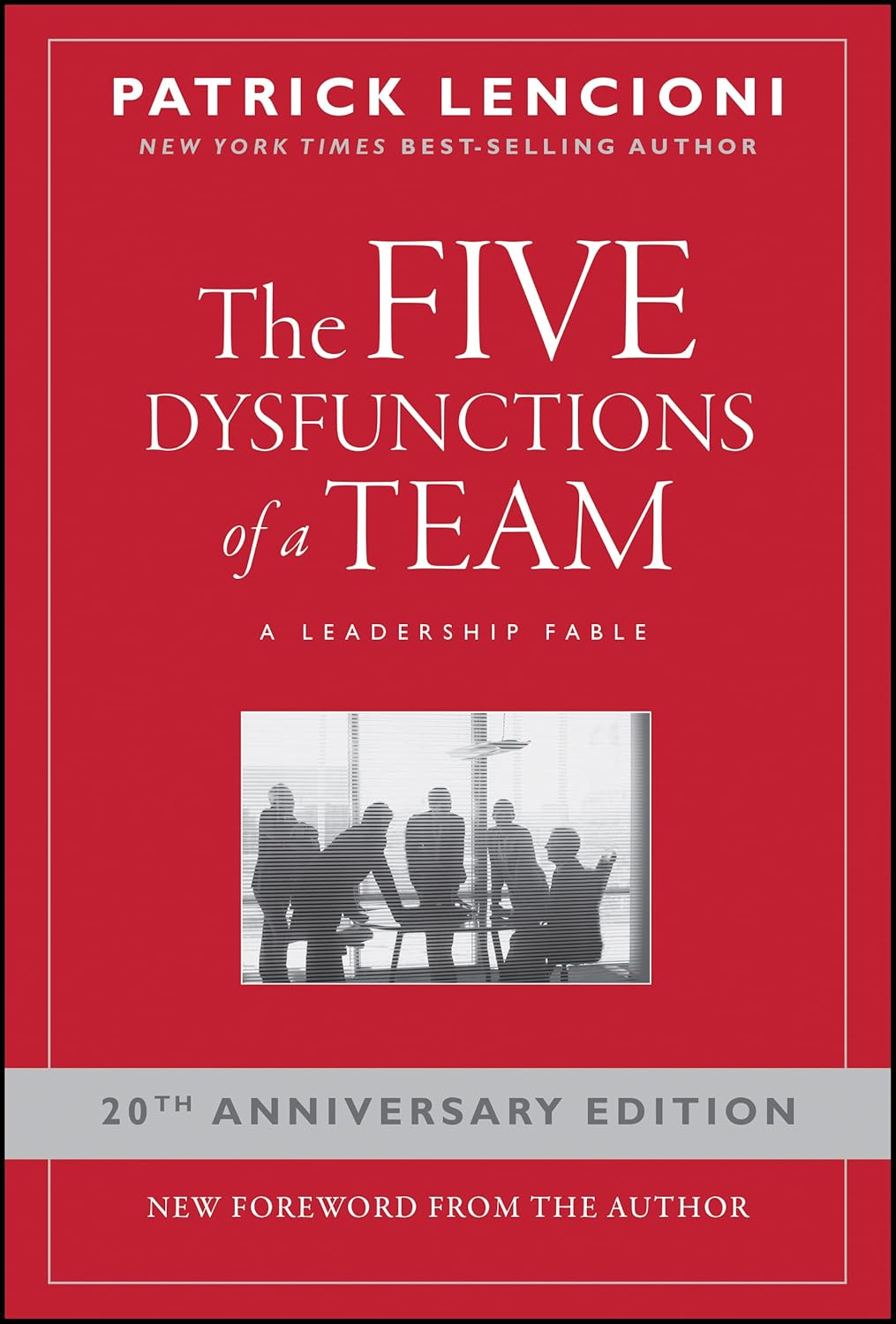
by Patrick Lencioni
Source book · ~4h read
“Politics is when people choose their words and actions based on how they want others to react rather than based on what they really think.”
The argument
Patrick Lencioni argues that team dysfunction follows a predictable hierarchy. At the bottom is absence of trust — when teammates won't be vulnerable with each other. That breeds fear of conflict (artificial harmony, no honest disagreement). Without conflict, you get lack of commitment (no real buy-in to decisions). Without commitment, avoidance of accountability (no peer pressure to deliver). And without accountability, inattention to results (people optimize for individual goals over team outcomes). The five build on each other; you can't fix the top without fixing the bottom.
At a glance
The hook
Most co-founder splits aren't about strategy. They're about a team that never learned to fight.
Founders rarely have a People problem in isolation. They have a trust problem masquerading as a strategy disagreement, a roadmap dispute, or a 'culture fit' issue. Lencioni's gift is naming the layers — once you can see them, you stop arguing about the wrong floor.
For first-time founders specifically, the early team is small enough that one absence of trust cascades through the whole company. A co-founder relationship with no real vulnerability calcifies into 'efficiency': you avoid hard conversations, you ship fast, you scale fast — and then one day something cracks and nobody knows how to repair it because you've never practiced repair.
0 takeaways
Pick your two highest-stakes peer relationships — usually a co-founder, sometimes a key early hire. For each, answer privately:
When was the last time you admitted to them you'd made a mistake before they noticed?
When did you last raise something that risked the relationship?
If the answer is 'I can't remember' or 'never,' you don't have vulnerability-based trust. You have artificial harmony. The fix isn't a team-building exercise — it's one honest conversation, this week, where you put something on the table you've been keeping private. The vulnerability has to come from you first; don't wait for them. The other four dysfunctions can't be addressed until trust is real.
Read
Search The Five Dysfunctions of a Team by Patrick Lencioni on Amazon, your local bookshop, or your library system.
The loop closes here
When a founder applies an idea from The Five Dysfunctions of a Team and something shifts, they post it as a Knack. Knacks tagged with this book surface here — practical, written by the people who lived it.
Open invitation
Did applying something from this book change a week, a decision, a meeting? Tell another founder. Even a small shift, written honestly, is the kind of Knack that gets marked “This worked” — and helps the next founder pick up the book and try it.
Pseudonymous by default. No humble-bragging — just here's what I tried, here's what shifted.
Share