Mental time-travel
- Mind in past or future
- 'Planning' as suffering
- Anxiety about uncontrolled
- Resist what is
- Present feels small
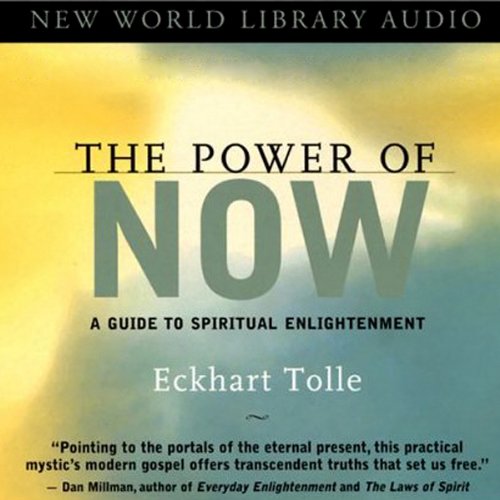
by Eckhart Tolle
Source book · ~5h read
“The present moment is all you ever have.”
The argument
Eckhart Tolle argues that most human suffering is mental — generated by the mind's habit of compulsively replaying the past or projecting into the future, rather than being present. The present moment is the only place life actually happens; the mind that resists this fact creates suffering. The book's practice is *observing your own mind, recognizing when it's stuck in past or future, and returning attention to now*** — without judgment.
At a glance
The hook
The future you can't control is preventing you from doing what you can.
Founders live mostly in the future: next milestone, next quarter, next risk. The future-orientation is partly necessary — building requires looking forward. But it tips into chronic anxiety when the founder's attention is rarely actually present.
Tolle's contribution — through his particular spiritual register, which not everyone connects with — is naming the cost. The constant mental rehearsal of futures isn't planning; it's suffering disguised as planning. Real planning is bounded; chronic future-projection isn't. The practice he prescribes — observing the mind, recognizing the pattern, returning to now — isn't anti-strategic. It's anti-corrosive.
For first-time founders, the value is operational sustainability. Persistence over years requires that the work itself be tolerable, not just the destination. Founders who can't be present in the day-to-day burn out. Tolle gives you a method — across his particular framing — for reclaiming the present moment as the place where you actually live and work.
0 takeaways
For one week, set a timer to remind you 5 times a day.
When it goes off, stop whatever you're doing for 30 seconds and take three slow, deliberate breaths.
During the three breaths, notice:
Where was my mind a moment ago? — Past, future, or present?
What was the dominant emotion? — Anxiety, frustration, contentment?
Can I bring my attention fully to this moment, just for these three breaths? — Without trying to fix anything, just being here.
After the three breaths, return to whatever you were doing.
This is not meditation in the formal sense. It's a 30-second interruption of the mind's autopilot, repeated 5× a day. Tolle's claim: over weeks, the interruptions begin to add up to actual presence in the work.
The output isn't transcendence. It's the small, repeated experience of choosing the present moment over the mind's commentary on it. For founders chronically future-projected, this is enough to reclaim significant ground.
Read
Search The Power of Now by Eckhart Tolle on Amazon, your local bookshop, or your library system.
The loop closes here
When a founder applies an idea from The Power of Now and something shifts, they post it as a Knack. Knacks tagged with this book surface here — practical, written by the people who lived it.
Open invitation
Did applying something from this book change a week, a decision, a meeting? Tell another founder. Even a small shift, written honestly, is the kind of Knack that gets marked “This worked” — and helps the next founder pick up the book and try it.
Pseudonymous by default. No humble-bragging — just here's what I tried, here's what shifted.
Share