Horizontal (1 → n)
- Better than competitor X
- Pricing slightly below incumbents
- Roadmap: catch up + 1
- Margin compresses over time
- Defensibility: brand, scale
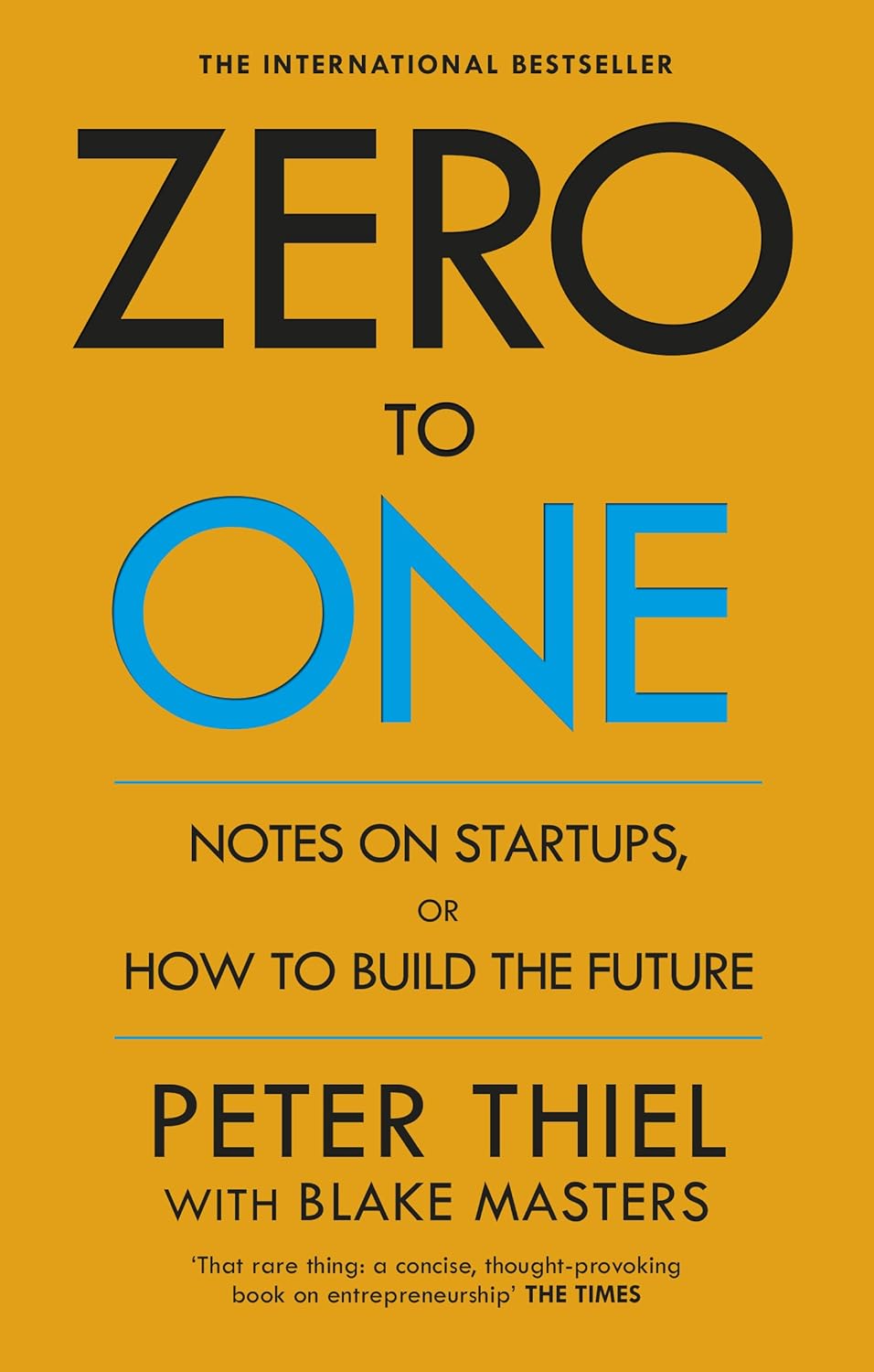
by Peter Thiel
Source book · ~3h read
“Competition is for losers. If you want to create and capture lasting value, look to build a monopoly.”
The argument
Peter Thiel argues that the most valuable companies don't compete; they monopolize a small market and expand from there. Going from 0 to 1 — creating something new — is fundamentally different from going from 1 to n (copying / scaling existing things). The unfair advantage isn't winning a competitive market; it's escaping competition entirely — being the only company that does what you do.
At a glance
The hook
The best startup pitch isn't 'we're better than X.' It's 'we're the only ones doing Y.'
First-time founders default to comparison-thinking. They benchmark, they pitch decks compare to incumbents, they price 'a bit cheaper than competitors.' Thiel names this as the trap of horizontal progress — getting incrementally better at the same thing.
The alternative — vertical progress, going from 0 to 1 — is harder, lonelier, and rarer because it requires conviction in something not yet validated by the market. The reward is monopoly economics: pricing power, distribution leverage, and the only known antidote to commoditization. For a Phase 1 founder, the real question isn't 'how do we beat the competition?' — it's 'what could we build that no one else is even trying to build?'
0 takeaways
Answer this in writing, in one paragraph: 'What important truth do very few people in your industry agree with you on?'
If your answer is 'we ship faster' or 'we have better UX,' you don't have a secret — you have a feature. A real secret is something that, if true, would change how the industry operates. 'Most B2B SaaS sales cycles are killing themselves with friction the buyer creates, not the vendor.' Or: 'Most enterprise customers prefer fewer features done well over more features done poorly, but every vendor lies about this in their roadmap.'
Now ask the second question: what would you build if your secret were true? That's your zero-to-one shot. If your day-to-day work doesn't reflect your secret, you're building horizontal progress and don't know it.
Read
Search Zero to One by Peter Thiel on Amazon, your local bookshop, or your library system.
The loop closes here
When a founder applies an idea from Zero to One and something shifts, they post it as a Knack. Knacks tagged with this book surface here — practical, written by the people who lived it.
Open invitation
Did applying something from this book change a week, a decision, a meeting? Tell another founder. Even a small shift, written honestly, is the kind of Knack that gets marked “This worked” — and helps the next founder pick up the book and try it.
Pseudonymous by default. No humble-bragging — just here's what I tried, here's what shifted.
Share